Suicide in Ahwaz: The Final Cry Against Systematic Impoverishment

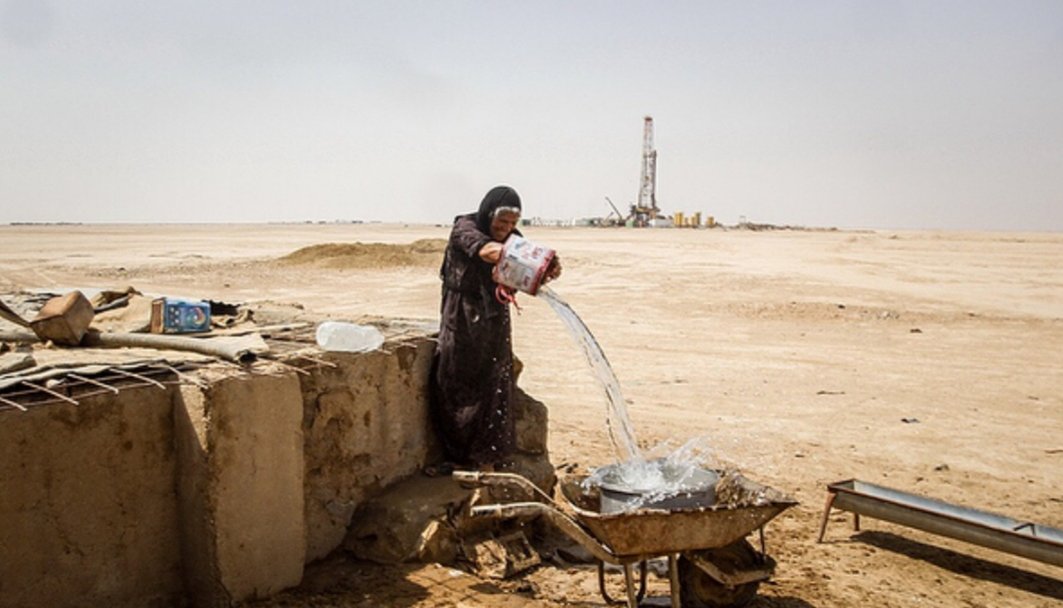
Ahwaz is slowly turning into a tragic stage where the lives of our youth are being claimed one after another through suicide. These incidents are not isolated, nor are they sudden acts of despair, as the Iranian occupying authorities attempt to portray them. Rather, they are the direct and cumulative product of deliberate policies of impoverishment, structural marginalization, and economic strangulation targeting an entire Arab people. This painful phenomenon reflects a deeper reality — a reality in which the occupation suffocates the Ahwazi individual and corners them in every aspect of life, from livelihood to dignity.

The tragedy of young Ahmed Baldi on the first day of November 2025 ignited widespread sorrow and anger across Ahwaz. Ahmed set himself on fire after authorities confiscated and destroyed his father’s kiosk — the family’s only source of income. Ahmed was a university student struggling to hold his future together with one hand while supporting his family with the other. The destruction of that kiosk shattered the fragile balance he had been desperately fighting to maintain.

Ahmad Baledi

The kiosk was not just a wooden structure; it was the last line of stability for the family. When the regime tore it down, it severed Ahmed’s final thread of hope. In an act that was both desperate and profoundly political, Ahmed turned his own body into a burning scream — a protest against the suffocating injustice surrounding his family.

Barely a day had passed after Ahmed’s tragic death when Ahwaz awoke to the news of yet another suicide: Kamal Baldi, age 26. Kamal, a husband and father of a young daughter, had been working through a contractor for the Ahwaz Steel Company. After being abruptly dismissed, he found himself unable to provide for his family. Poverty, uncertainty, and the complete collapse of job security pushed him to end his life on 2 November 2025.

Kamal Baledi

These incidents are not disconnected tragedies; they are part of a long, devastating pattern that has unfolded in Ahwaz over the years. One of the earliest alarms was the case of Younes Asakereh, who set himself on fire in March 2015 in the city of Mohammara after the occupation forces confiscated the cart he used to earn a living. His act was a desperate warning, but the authorities chose to ignore it — continuing instead with policies that deepen poverty and expand marginalization.

The pattern has only grown clearer as more cases emerge, year after year. Here are just a few examples from a long list of tragedies:

  • Raad Silawi, 50, from the village of Gheyzaniyeh, took his own life on 20 October 2025 after being dismissed from the oil company where he had spent decades working.
  • Mohammad Grawi, from the city of Fallahiyah, set himself on fire in August 2025 after being crushed by unbearable economic pressures.
  • Reza Alsari, 25, died by suicide in April 2025. At an age when he should have been building a career, he found not a single opportunity ahead of him.
  • Farzad Jalali (25) and Abbas Farisat (27), both from the city of Khafajiya, died by suicide during 2025 under similar conditions of unemployment and economic oppression.
  • Tariq Khaldi, from Khalafiyah, ended his life on 19 May 2023 after months of unpaid wages and crushing poverty.
  • Abbas Mansouri, 19, died by suicide on 11 December 2022 shortly after being released from prison, where he had been detained for participating in protests. Upon release, he found himself trapped by psychological trauma, social pressure, and economic hardship.

Despite their differences, all these cases share the same root causes:

  • exclusionary policies
  • systematic discrimination against Arab Ahwazis in employment
  • destruction of the local economy
  • absence of social or legal protection
  • targeted attacks on family income sources

In the midst of this suffering, one truth becomes undeniable: the Iranian regime uses poverty as a weapon. It denies jobs, destroys small businesses, suffocates traders, withholds wages, and then dismisses suicides as “psychological problems.” But the harsh reality of Ahwaz — with all its painful details — exposes the falsehood of the official narrative.

The rising number of suicides among Ahwazi youth is not a sign of weakness. It is a sign of how deep the wounds inflicted by occupation policies truly run. These young people were not searching for death; they were searching for a dignified life. Yet they found themselves trapped between unemployment that kills hope, poverty that tears families apart, and repression that eliminates even the right to express their anguish.

As Ahwazi activists, it is our responsibility to confront the world with the full truth: these victims are not statistics. They are stories of living injustice — silent protests, echoes of a prolonged suffering that has gone unanswered. We owe it to them to amplify their voices, to expose the policies that pushed them to this fate, and to fight for social awareness, public support, and recognition of their right to live in dignity and security.

For each soul lost to poverty and oppression, our resolve grows stronger. We continue our struggle so that no other young person in Ahwaz will feel compelled to turn their own body into a final message of protest.

Human Rights Department